
Dog New Year Resolutions: Start the new year off right with your dog
December 28, 2011 • Health & Wellness

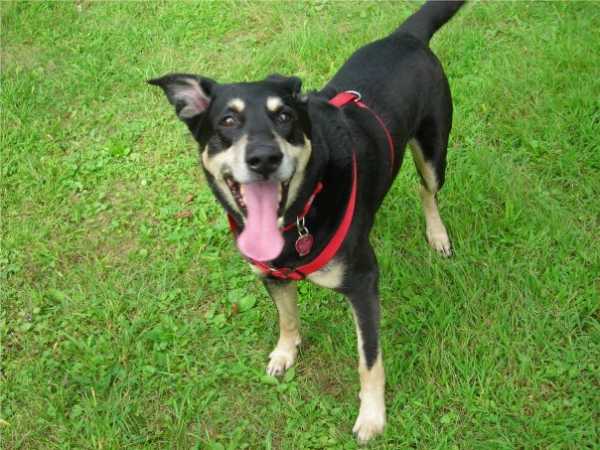
Ah, new beginnings. The calendar is ready to turn over anoter month and into a whole new year. As humans, we make our "resolutions" and set the bar high for a bright new year. The same can hold true for our dogs. With some tried and true tips and suggestions from animal behaviorists, the new year can mean Fido turning over a new leaf as well. Here's to a happy, waggy and healthy 2012 for all with some great tips for dog moms and dads.
“Just like people, pets sometimes have trouble breaking bad habits---but with the right strategies, you can help your cat or dog turn over a new leaf. It’s all about understanding why problems crop up and how to encourage the development of better behavior,” Kristen Collins, animal behaviorist with the ASPCA.
7BS2G2VPQMJ5
Got a chewer? It’s normal for puppies and dogs to chew on objects as they explore the world. Chewing accomplishes a number of things for a dog. For young dogs, it’s a way to relieve pain that might be caused by incoming teeth. For older dogs, it’s nature’s way of keeping jaws strong and teeth clean. Chewing also combats boredom and can relieve mild anxiety or frustration. Rule Out Problems That Can Cause Destructive Chewing.
Useful Tips
• “Dog-proof” your house. Put valuable objects away until you’re confident that your dog’s chewing behavior is restricted to appropriate items. Keep shoes and clothing in a closed closest, dirty laundry in a hamper and books on shelves. Make it easy for your dog to succeed.
• Provide your dog with plenty of his own toys and inedible chew bones.
• Offer your dog some edible things to chew. Also be sure to keep an eye on your dog whenever he’s working on an edible chew so that you can intervene if he starts to choke.
• When you can’t supervise your dog, you must find a way to prevent him from chewing on inappropriate things in your absence. For example, if you work during the day, you can leave your dog at home in a confinement area for up to six hours. Use a crate or put your dog in a small room with the door or a baby gate closed.
Got an excessive barker?
The first step toward reducing your dog’s barking is to determine the type of bark your dog is expressing. The following questions can help you to accurately decide on which type of barking your dog is doing so that you can best address your dog’s problem. Think about your answers to these questions as you read through the information below on the different types of barking and their treatments. Some more ideas and tips here: http://www.aspca.org/Blog/08-26-11-1-why-does-my-dog-bark-so-much.aspx
1. When and where does the barking occur?
2. Who or what is the target of the barking?
3. What things (objects, sounds, animals or people) trigger the barking?
4. Why is your dog barking?
What NOT to Do
• Do not encourage your dog to bark at sounds, such as pedestrians or dogs passing by your home, birds outside the window, children playing in the street and car doors slamming, by saying “Who’s there?” or getting up and looking out the windows.
• Do not punish your dog for barking at certain sounds, like car doors slamming and kids playing in the street, but then encourage him to bark at other sounds, like people at the door. You must be consistent!
• Unless a Certified Applied Animal Behaviorist or veterinary behaviorist advises you to do otherwise, never use punishment procedures if your dog is barking out of fear or anxiety. This could make him feel worse and, as a result, his barking might increase.
• Never use a muzzle or Husher® to keep your dog quiet for long periods of time or when you’re not actively supervising him. Dogs can’t eat, drink or pant to cool themselves while wearing muzzles, so making your dog wear one for long periods of time would be inhumane.
• Never tie your dog’s muzzle closed with rope, cord, rubber bands or anything else. Doing this is dangerous, painful and inhumane.
Got a Puppy who is Housetraining? Puppies need to be house trained in order to understand that it’s not okay to eliminate in your house. House training is a simple process, but one that must be carried out positively (without punishment that
scares the puppy) and consistently, following two main guidelines: 1) prevent indoor accidents through confinement and close supervision, and 2) take the puppy outside on a frequent and regular schedule and reward him for eliminating where you want him to go.
More tips and how to's here: http://www.aspcabehavior.org/articles/87/Teaching-Your-Dog-to-Ask-to-Go-Out.aspx
Join the FIDO Friendly magazine pack and never a single issue of the one magazine your dog will thank you for.