
Hot Topic Can dogs really smell fear?
March 07, 2011 • Health & Wellness

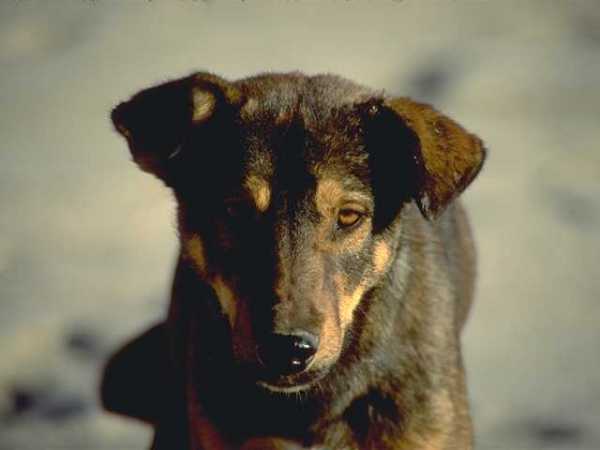
Our pets have a remarkably keen sense of smell. A dog’s “smelling” ability is said to be a thousand times greater than that of humans. And a cat’s sense of smell, while not as intense as a dog’s, is 14 times stronger than a human’s. But can they actually smell fear?
As experts have pointed out, for pets to be able to smell our fear we would have to emit some kind of fear scent or odor. In reality, the human “fear” your dog or cat is smelling, is most likely sweat.
Are some pets more sensitive than others?
Unlike people, a dog interprets the world primarily through chemical communication (think odors). The portion of the canine brain dedicated to analyzing smells is 40 times larger than a human’s. When your pet seems to have the uncanny ability to “know” how you feel, he is actually detecting the slight shift in molecules of odors you’re putting off. And this works for sensing everything from thunderstorms to moods.
Do our pets “absorb” our fear?
Just like in humans, fear is a normal reaction when an animal is faced with a situation it perceives as
dangerous. Fear can be triggered by any number of factors. Loud noises, such as fireworks and thunder, are some of the most common reasons for fear in pets.
However, some pets (like some people) are nervous, hypervigilant, easily startled, and may suffer from a phobia and/or chronic anxiety.
Are phobias or anxiety a common problem in pets? Nearly 60 percent of pet owners who responded to an independent survey, commissioned by Virbac Animal Health, said they have at least one dog that experiences anxiety. In addition, 25 percent said they have at least one anxious cat, and 30 percent indicated they have several dogs and/or cats with an anxiety problem.
“We’re finding anxiety is not only a worry for a few pets, it’s a common problem,” said Stacey Leonard, senior product manager, Virbac Animal Health. “We’ve also found that anxiety and fear are underlying factors of many behavioral problems in pets, which can threaten the relationship between pets and their owners.”
How can I tell if my pet has an anxiety problem?
A pet suffering from anxiety or a phobia typically shows some or all of the following most common signs:
• Shakes, trembles, pants
• Urinates on him/herself
• Growls or barks with ears, tail and head lowered
• Runs away or hides
• Salivates excessively
• Panics when left alone
What can I do to help ease my pet’s anxiety?
“A pet with frequent anxiety is suffering, so take action as soon as possible,” said Heidi Lobprise, DVM, Virbac Animal Health. “If treatment is delayed, anxiety can lead to aggression and increase the risk of skin conditions, digestive disorders and heart disease.” Ask your veterinarian for help. In some cases, behavior training is enough, while severe cases may need added therapy.
Guest post provided by Virbac Animal Health.
Question: Can you tell when your dog is upset or nervous?