Cadaver dogs: What is takes to become one
January 31, 2012 • Most Popular

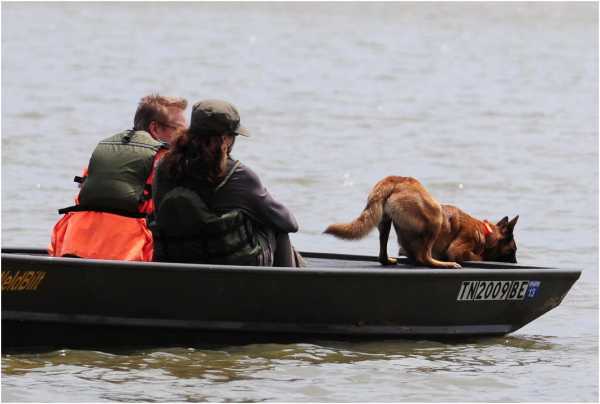
In our fall issue, FIDO Friendly magazine investigated CSI (Canine Scene Investigators) and went undercover with dogs who solve crimes, help people get reunited, and in general, are considered Sherlock Bones of the dog world.
We “uncovered” yet story we wanted to share, and this is the kind of story you grab a cup of tea for, talk about with dog friends at the water cooler (or on Twitter), and want to go give your dog a tummy rub afterwards.
Meet Joan M. Brehm, President and Operational Handler of Illinois Search Dogs. Learn more about Joan, the fur-bulous work she does with dogs, and then log on and visit www.illinoissearchdogs.org.
FIDO Friendly: Thanks for joining us, Joan. Tell us How long have you been involved with cadaver dogs and how did you get started?
Joan: I began training and working in dogs K9 Search and Rescue (SAR) in 1997 with my first partner, K9 Chief, a male Redbone Coonhound/Lab mix that I rescued at 7 weeks old when I was living in Missoula, Montana.
I had no real knowledge about K9 SAR, but had always wanted to volunteer with the local Search and Rescue unit. At about 6 months old it was very clear that Chief needed a job or he was going to destroy my house. I attended a local SAR meeting and was put in touch with a woman on the Search and Rescue Unit who did K9 SAR, and she provided critical mentoring and help as we began our training. I had no idea if Chief had the right traits and temperament to do this work or how this would become such a big part of my life almost 14 years later.
I first began training Chief in avalanche and wilderness search due to the nature of the environment in which we lived. At about 2 years old I added land and water cadaver to his training and he really excelled, especially at the water work. When I moved to Illinois in 2003, the need for avalanche and wilderness search was pretty non-existent for obvious reasons, so Chief specialized in land and water cadaver exclusively for the rest of his career. Chief worked until he was almost 12 years old, and in October, 2010 I said good-bye to him at 13.5 years old after an amazing career. In 2005 I began training my second K9 SAR partner, K9 Sula, a female Redbone Coonhound.
Sula is now six years old and is certified with the International Police Work Dog Association in land and water cadaver, as well as trailing.
FF: Wow, that is amazing. How many dogs have you worked with in this capacity?
Joan: I have personally trained and worked two dogs in this capacity. However, I have had the great fortune to work indirectly with many other dogs via various training seminars and workshops. I learn something new from every dog I see and work with.
FF: What is a typical day in the life of a cadaver dog on site?
Joan: I am not sure there is a “typical” day in the life of a cadaver dog on site. It really varies by the nature of the call-out or request. However, one typical request from law enforcement agencies is to search “areas of interest” in relation to a potential criminal case or missing persons’ case.
It is common to be asked to search various locations and not find any evidence. However, this is still valuable information as it allows law enforcement to focus their investigations on other areas, and not spend more time in places that are not as relevant. Another common use for cadaver dogs is to locate a drowning victim in a body of water. The dog works from either shoreline or a boat and can indicate a more precise location of a drowning victim under water. This makes the diver’s job much easier and safer, as it can minimize the time that divers must spend in dangerous conditions searching for a body.
A cadaver dog can work very long days, often searching over an extended period of time or at night. They commonly work in very difficult conditions (thick brush, steep terrain, natural disaster debris) because a dog can search those difficult areas much more efficiently and quickly than any human searchers could manage. In the case of a natural disaster, such as the tornado in Joplin, Missouri, a properly trained cadaver dog can cover large areas of thick debris or collapsed structures in a fraction of the time it would take human searchers to search through the debris.
FF: Can you tell me how the dog is trained, the process, how long, and the types of assignments the dog is involved in?
Joan: Cadaver dogs are first trained to recognize and locate the odor of human remains.
Next they are trained to give a final response when they locate that odor, indicating to the handler the location of the human remains. All of this training is based on a reward system – the dog is trained to locate a target odor (human remains) and perform a trained final response so that the handler will then produce a ‘reward’ – in most cases that reward is some sort of toy (ball, tug). Most cadaver dogs are trained for a ‘passive’ final response. This means they will either sit or down next to the odor source and not disturb the human remains in any manner. Any human remains are always considered a potential crime scene, so it is important that the dog not disturb the evidence. The best dogs for this work are the ones that have very solid nerves (not fearful of noises, surfaces, etc…), will do anything for a toy reward, and have a very high drive to ‘hunt’ for the target odor.
It is much more about the specific traits of an individual dog than it is a specific breed. If the training begins when the dog is a puppy, it typically takes up to 18 months to complete the training. This is primarily due to the need to allow the dog to properly mature and develop before they are certified. However, if the training begins with a dog that is already 9-18 months old, then it can take as little as 3-4 months to complete the training, depending on the consistency of the training and the aptitude of the dog. Cadaver dogs work a variety of assignments such as missing persons’ cases, known criminal cases, disaster response, and drownings.
At first, many people may not understand why anyone would want to train a dog to find human remains. However, it is stories like those above that make this work so rewarding. Although someone may no longer be alive, their family still wants them back and the opportunity to say good-bye to their loved one. Our dogs can help give them that closure.
Images:
K9 Biba training for water recovery with handler Susan Vieth (left) and Karen Galambos
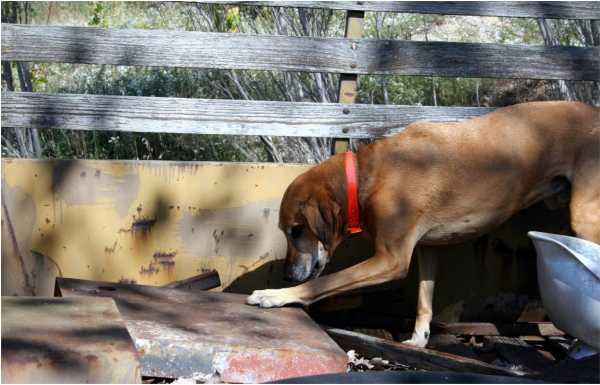
K9 Sula indicating the location of human remains during a training session. Photo Credit: Shirley Brantingham
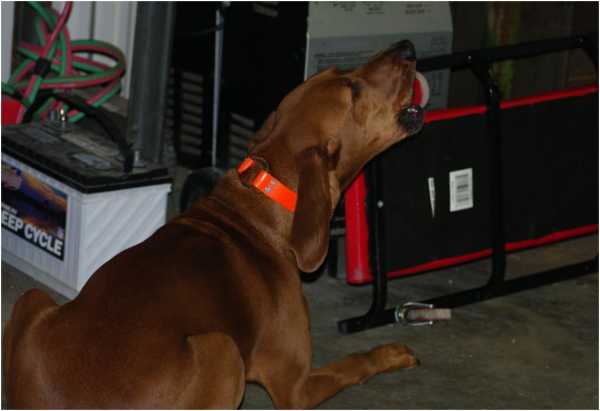
Bill Owens: K9 Chief indicating human remains during a training session.
Join the FIDO Friendly magazine pack and never a single issue of the one magazine your dog will thank you for.