Strategies for Reducing Stress on Your Pet During Your Move
June 30, 2011 • Travel • Trends •

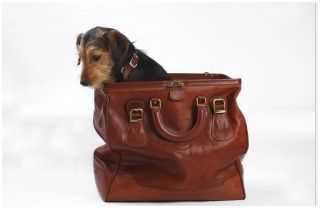
With a new home, neighborhood, and town, adjusting to your new environment is not only challenging for you, but also for your pet. Dogs exposed to unfamiliar surroundings will try to go back to their old homes, often getting lost. The transition into a new home is a stressful and taxing, but it is very important to make sure your dog makes a smooth transition in order to prevent run-aways and unwanted stress. Follow these tips below to ensure a healthy and safe change of location.
Comfortable transportation.
Whether your trip to your new home is long or short, it is always important to make sure your pet travels comfortably. This means purchasing a pet cage that is large enough for him to move around comfortably in. Furthermore, purchase some blankets or cushions for the pet cage so that he can comfortably sleep in there if needed. Put in familiar toys and other things he likes to play with in order to increase the sense of familiarity throughout your relocation.
Avoid too many new stimuli.
The best idea for transporting a pet is to keep it from seeing the transition of the move. Try covering the front of your pet carrier with a blanket in order to decrease the amount of light that enters your pet’s cage. This is not to take him by surprise. As you are moving, your pet will be exposed to so many foreign and unfamiliar stimuli that it can cause him to develop a sense of panic and uncertainty. To prevent this from happening, try to keep your pet from seeing every single new thing that passes your car.
Comfortable temperature.
With a blanket over the front of your dog crate, your dog may start to feel stuffy faster than you will. To prevent this from happening, always make sure your air conditioning is on in the car if you are traveling on a sunny day. If your car does not have air conditioning, try cracking your windows approximately an inch. Although it is tempting to have your windows wide open, this increases the chances of dust and other foreign objects to enter your dog’s eyes and cause irritation. Furthermore, if you take a break at a rest stop, be sure to leave the windows open if you do not plan on taking your dog out of the crate. Even a minute in a parked car may seem harmless to you, but cars heat up extremely quickly, rapidly increasing your dog’s risk of a heat stroke.
Avoid too much food and water.
Similar to humans, too much food can cause motion sickness for dogs that are traveling. Do not feed or provide water to your dog the few hours before you depart. Instead, feed him once a day on the road and bring water from home to give him because water from random stops along the road can cause upset stomachs. Make sure your dog also gets frequent bathroom stops along the way.
Replicate.
Dogs put in foreign environments will often try to find their ways back to their old homes. To prevent this from happening, replicate some of the components you had at your old house to make your new place seem more like home. For example, if you had a dog house in the right corner of your backyard, put your dog house in the same place in your new backyard. Put his food bowl in the same place in the kitchen that it was in your old house. All of these familiar components will show your dog that his new home is not so different from his old home, decreasing the chances of him running off.
Tim Eyre works in the self storage industry, regularly traveling to see locations like Phoenix self storage. In many locations, like Miami self storage, Tim helps his customers store seasonal equipment when it is not being used for outdoor activities or home improvement projects.
Have you seen our 50th issue, on sale now???? For 20% off a new subscription or renewal to the only magazine dedicated to the travel and lifestyle of dogs, and the one magazine your dog will thank you for, follow the trail to FIDO Friendly magazine’s subscription department online.
Use code DEXTER to save 20% at checkout.